
For many small brands, the problem is not a lack of effort.
You post more often, join more markets, run another promotion, pay for another ad, and hope that higher sales will finally make the business feel easier. But what if sales go up while profit barely moves?
And what happens when people discover your brand through an ad, buy once, and then disappear?
For creators and emerging brands, sustainable growth is rarely about doing more marketing.
It is about understanding where the money actually goes, which customers are worth keeping close, and how every touchpoint—from pricing to LINE to AI-generated content—works together.
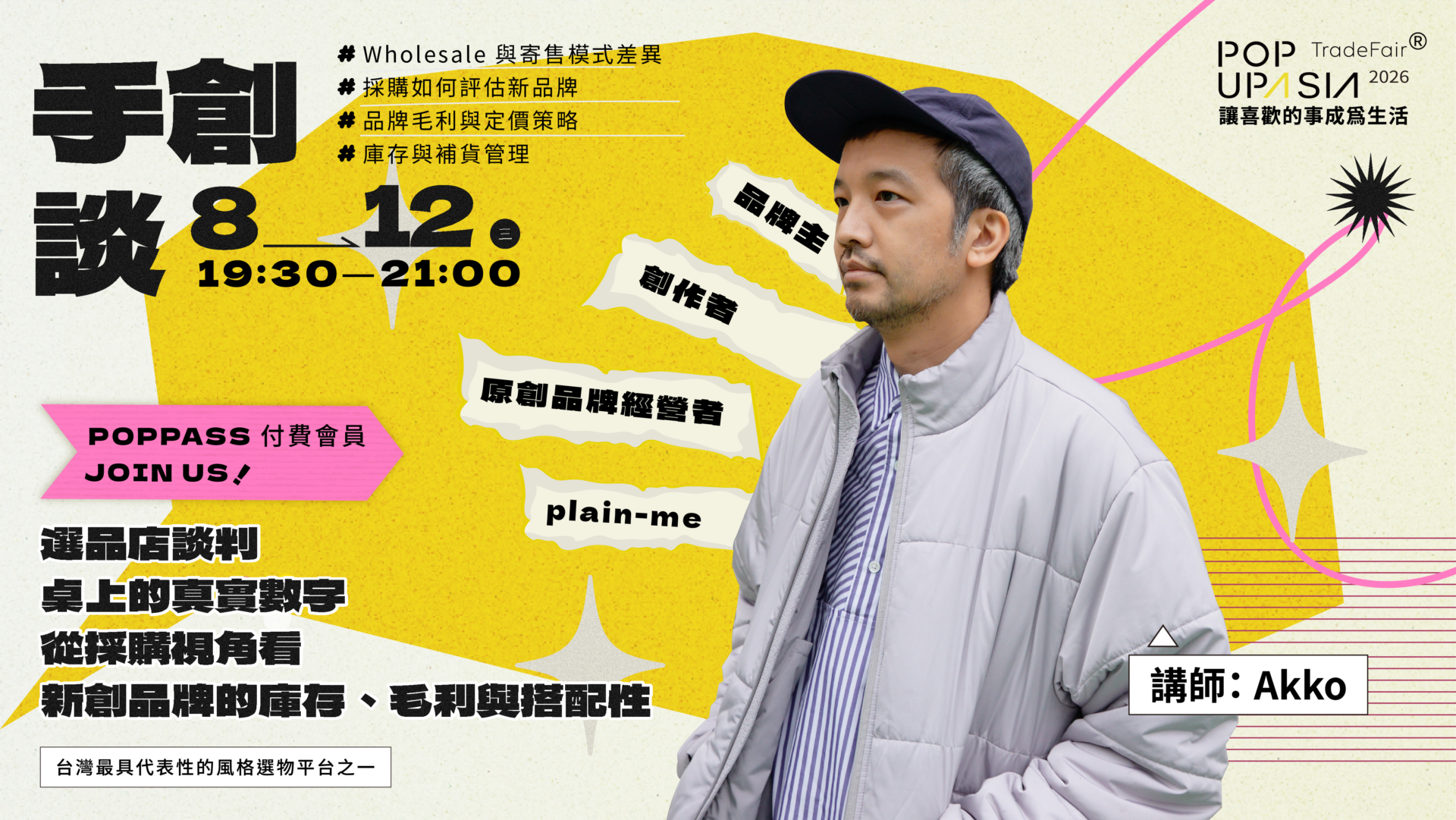
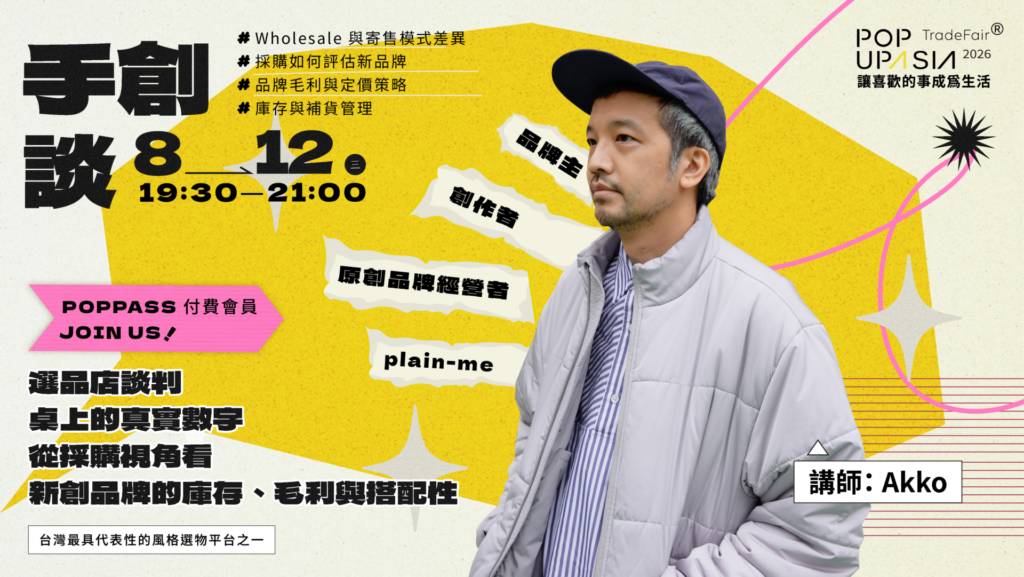
These were some of the questions explored during two August editions of Handcraft Talk, held on August 12 and August 26, where speakers and participating brands looked at the less glamorous, but far more important, side of building a business that can last.

More Sales Do Not Always Mean More Profit ⋆˚꩜。
The August 12 Handcraft Talk, led by plain-me, started with a subject that many young brands eventually have to confront: the real numbers behind retail.
A product may sell well. A shop may look busy. Monthly revenue may even seem impressive.
But revenue is not profit.
Once product costs, employees, rent, channel fees, discounts, utilities, advertising, and other operating expenses enter the picture, the amount left can look very different from the number displayed on the sales report.
Through real retail experience and financial examples, the session showed why founders need to understand the difference between revenue, gross profit, and net profit before making decisions about expansion or promotion.
This is particularly important for handmade and independent brands. When production volume is relatively small, simply copying the pricing strategy of a mass-market brand may not work. A lower price may attract more customers, but the business must then sell enough additional units to compensate for the lower profit on each item.
That changes the question founders need to ask.
It is not simply, “How can I sell more?”
It is rather,
“How much does each sale actually contribute to keeping my business running?”
And that one change in perspective can completely alter the way a brand thinks about pricing.
Wholesale or Consignment? The Channel Changes the Numbers ✮⋆˙
Getting into a well-known store can feel like an important milestone for a young brand, but being stocked by a retailer does not automatically mean the partnership is financially healthy.
During the August 12 handcraft talk, participants looked at the differences between wholesale and consignment, including who takes on inventory risk, how payment terms affect cash flow, and what retailers consider when evaluating a new brand.
From a buyer’s perspective, a beautiful product is only one part of the decision.
Its price, expected sales volume, margin structure, brand visibility, uniqueness, and even how well it complements other products in the store can affect whether the partnership makes commercial sense.
For creators, this means entering a new sales channel should not be treated as exposure alone.
A channel may bring more customers but require a different margin. Another may reduce inventory risk but delay payment. A third may look attractive because of its reputation, yet create pressure on cash flow behind the scenes.
The most valuable lesson was not that one model is always better than another. It was understanding what each model asks the brand to give up in exchange for access to that market.
Before Offering a Discount, Do the Math ˎˊ˗
Discounting is one of the fastest ways to generate movement.
It is also one of the easiest ways to create the illusion of growth.
During the session, pricing examples demonstrated how quickly the economics of a product can change after a discount. Lowering the selling price does not automatically lower rent, salaries, or the other fixed expenses required to operate the business.
That means a seemingly small discount can require a much larger increase in sales volume just to reach the same financial result.
The point was not “never offer discounts.”
It was rather:
know what the discount is supposed to accomplish before giving away margin.
For an independent brand, short-term sales should not come at the cost of making the business harder to sustain.
The same logic applies to inventory. Instead of producing based only on optimism, brands can look at expected annual and monthly sales, production lead times, replenishment speed, and safety stock before deciding how much inventory to hold.
Too little stock creates missed opportunities. Too much stock turns cash into products sitting on a shelf.
The right amount is rarely a guess.
What If the Problem Is Not Advertising,
but What Happens After the Click? ⟢
Two weeks later, the August 26 Handcraft Talk approached growth from a different direction.
Many small brands know how to bring people to an Instagram post, marketplace listing, or advertisement. The harder part is turning that attention into a relationship.
That is why the session looked closely at LINE private traffic, brand positioning, digital tools, and AI-assisted marketing.
Instead of repeatedly paying to reach the same type of customer through advertising platforms, brands can create a direct path for people who already showed interest.
Someone scans a QR code at a market booth.
Another person discovers the brand through social media.
A customer finds a QR code on the packaging after making a purchase.
Where should they go next?
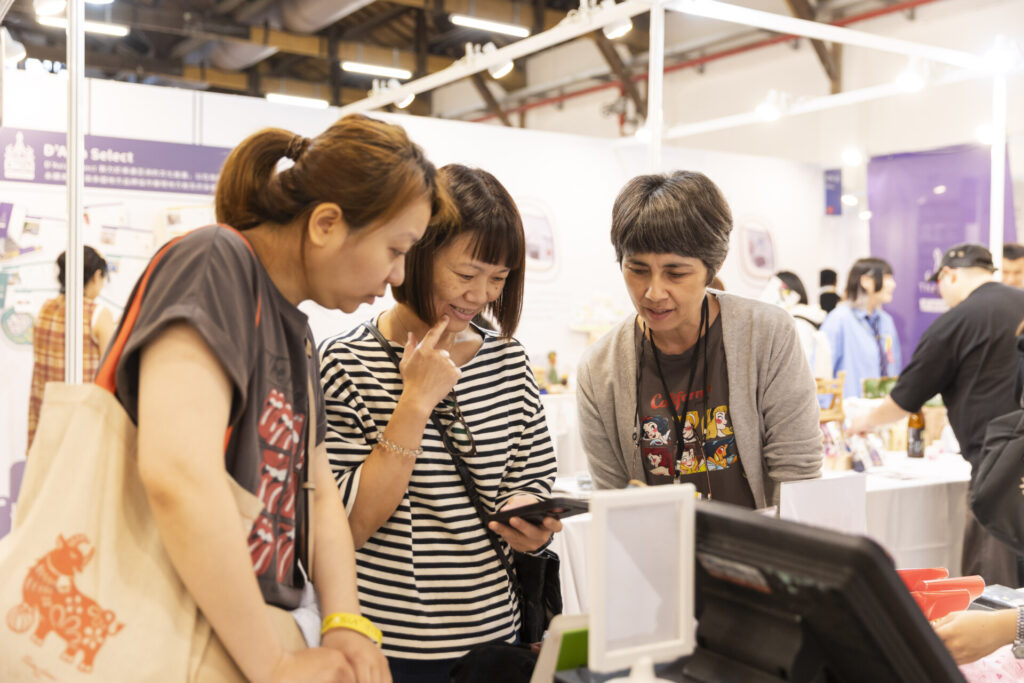
The discussion explored how LINE official accounts, brand pages, product pages, QR codes, and other digital touchpoints can work together so customers do not simply encounter a product once and disappear.
It is not about adding another digital tool because everyone else has one.
It is about giving interested customers somewhere useful to go next.
AI Cannot Fix a Brand That Has Nothing Specific to Say 𖤐
AI naturally became part of the August 26 conversation, but the session did not treat it as a magic content machine.
Before asking a tool to write product descriptions or marketing copy, participants first had to think about their own businesses:
Who are they selling to?
Where are they currently selling?
What questions do customers ask before buying?
What makes the product different?
What should someone understand or feel after encountering the brand?
Only then does AI become useful.
One particularly practical takeaway was the importance of replacing vague adjectives with specific product information.
Words such as “beautiful,” “premium,” “unique,” or “high-quality” can describe almost anything. They do little to help customers understand why this particular product deserves attention.
A better starting point is the product itself: its material, use, situation, design detail, story, or other concrete characteristics that distinguish it from alternatives.
AI can help turn that information into product copy, visual concepts, marketing materials, and different content formats. But the quality of the output still depends heavily on the information the brand provides.
Generic input creates generic marketing.
And even when the first draft looks convincing, human review still matters
—especially when generated text needs to represent the tone, details, and personality of a real brand.
From a QR Code to a Customer Journey ⟡
The most interesting part of digital marketing is not any single tool. It is what happens when those tools are connected.
During the practical session, participants explored ways to build a clearer path from offline discovery to online information and eventually to a sales channel.
A QR code can connect packaging or a market booth to a brand page. A LINE menu can guide customers toward product information or purchasing pages. Brand and product content can also be prepared in multiple languages—including English, Japanese, Korean, and Thai—to make communication with international audiences easier.
For small brands without a complete standalone website, this kind of structure can be especially useful.
The goal is not to create the most complicated digital ecosystem possible.
It is to remove unnecessary friction between
“I am interested in this brand” and “I know what to do next.”
That could mean learning more about the product, contacting the brand, returning after an event, or eventually making a purchase.
And that is where the August 12 and August 26 conversations unexpectedly meet.
One session focused on the numbers behind every sale. The other focused on building stronger paths toward the next sale.
Together, they point to the same idea:
a sustainable brand is built not only by attracting more people, but by making better decisions about margin, inventory, customer relationships, and the tools used to support them.
The Most Useful Part Happens in the Details ◡̈
There is, of course, much more behind each of these ideas.
The complete Handcraft Talk sessions went deeper into the financial calculations behind retail decisions, channel structures, inventory planning, brand worksheets, content development, AI prompting, LINE settings, product-page creation, and practical exercises carried out together with participating brands.
Those details are intentionally not reproduced here.
Because understanding that discounts affect profit is one thing. Sitting down with your own numbers and seeing exactly what happens to your business is another.
Knowing that AI needs better information is one thing. Learning how to organize your brand information and turn it into something you can actually use is another.
And that practical layer is exactly where Handcraft Talk goes beyond the kind of advice you can find by scrolling through another marketing post.
⤷ Join POPPASS and
Grow Your Brand With Real Business Knowledge !

click here to see the full schedule of the Handmade Talk
If you are a handmade creator, independent brand owner, lifestyle product designer, or small business preparing for exhibitions and overseas opportunities, Handmade Talk is designed for you.
This is not about learning business from far away. It is about standing closer to the market, understanding how decisions are made, and preparing your brand for the next opportunity.
Join POPPASS for NT$1,000/year and access 12+ practical brand growth sessions throughout 2026.
A single session is priced at NT$500, but we warmly invite you to become a POPPASS member.
With an annual membership of only NT$1,000, you can join more than 12 online Handcraft Talk sessions throughout the year and continue learning practical brand management
and business skills in a more cost-effective way.
Google Meet links will be sent to members by email before each session.
For questions, please contact:
advertise@campobag.com
Want More Brand Stories?
Join POPPASS—our B2B platform connecting you with authentic, creative brands from across Asia. Explore exhibitor profiles, start collaborations, and be part of the POPUPASIA® network.
Join POPPASS ➜ Tutorial on how to register